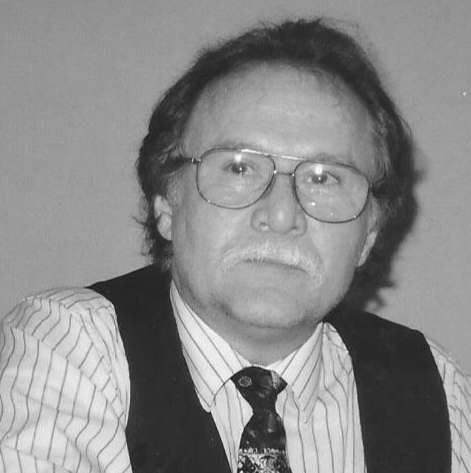
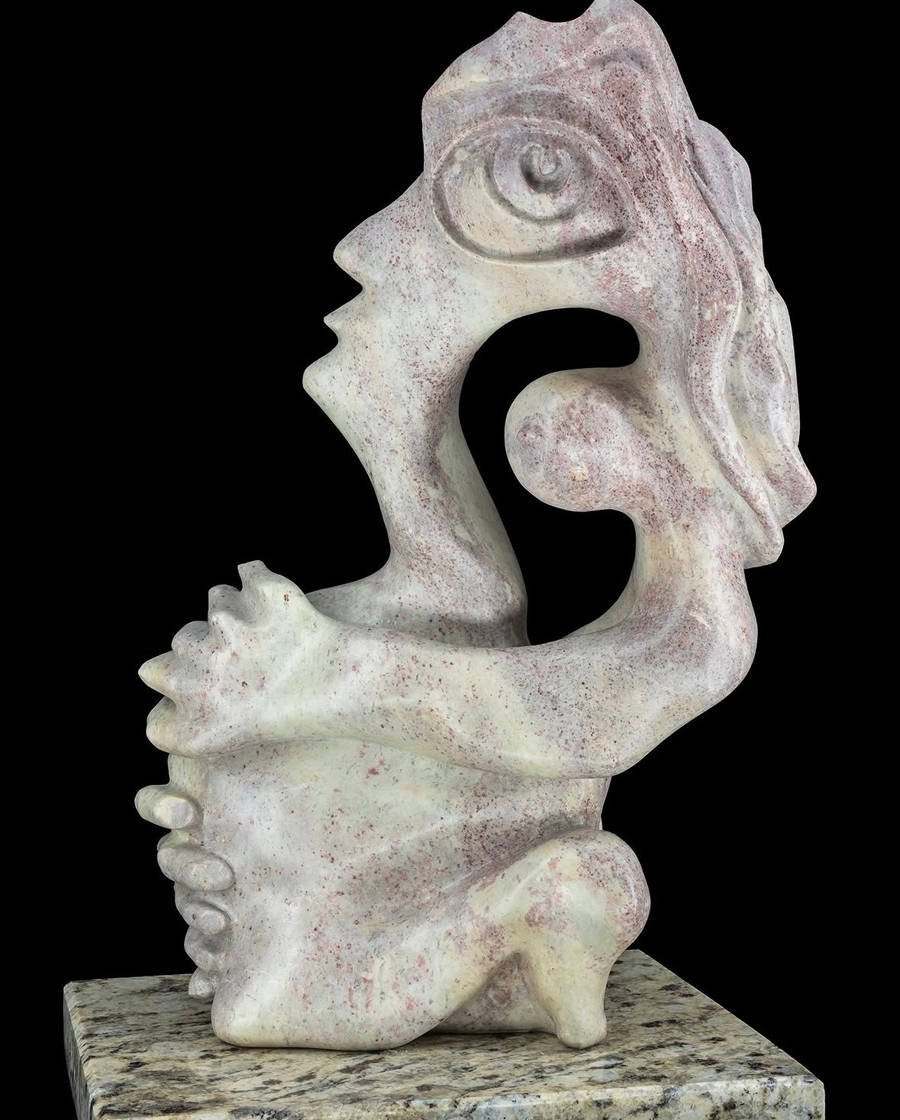
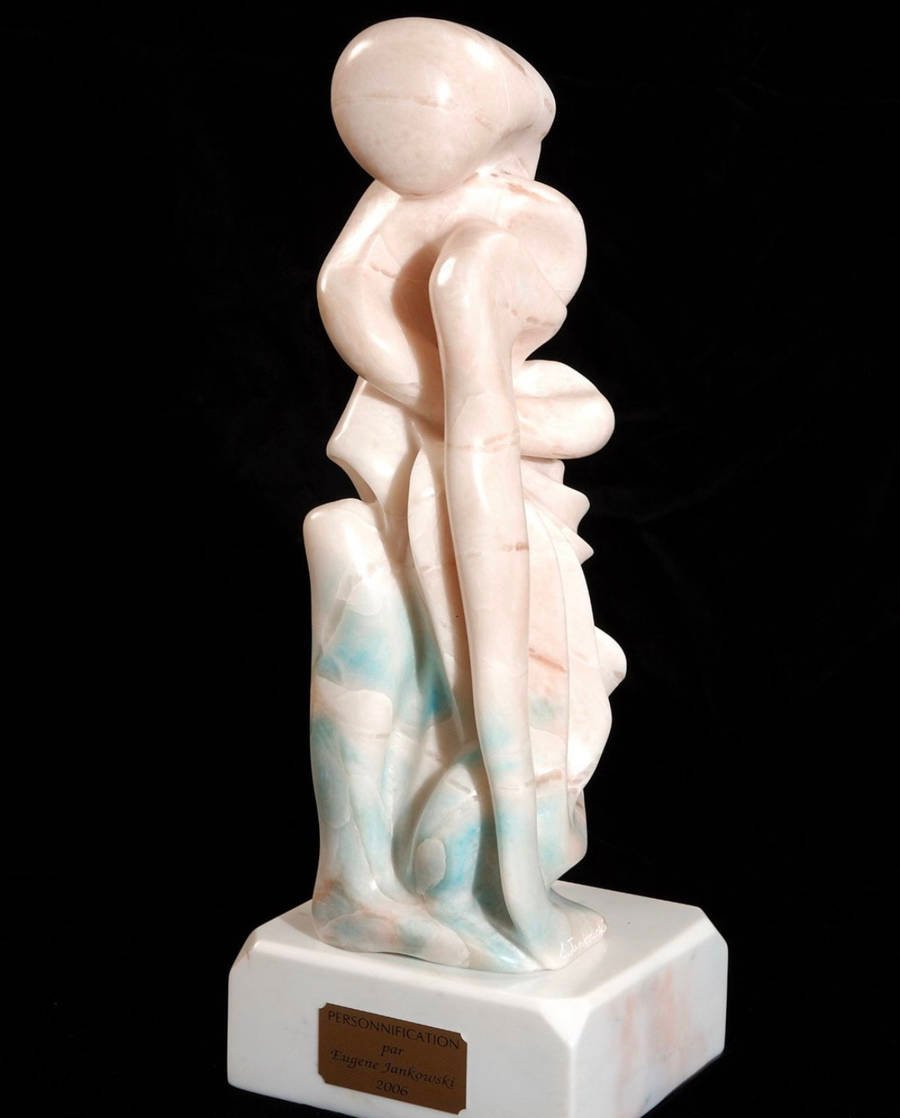
C’est à la lumière de quatre influences majeures : ses origines polonaises, son enfance passée dans la nature abitibienne, sa formation professionnelle et, dernièrement, ses relations avec les Inuits, qu’on peut mieux comprendre le parcours et les œuvres d’Eugène, en tant que sculpteur sur pierre.
Au début, il sculptait des personnages fondés sur la mythologie et l’ésotérisme, deux thèmes qu’il a exploité pleinement. Voulant parfaire sa maîtrise, Eugène commença à sculpter des corps humains, des têtes et des animaux de façon répétitive, et cela lui permit de réaliser qu’il pouvait enseigner ce qu’il avait appris lui-même, par essai et erreur.
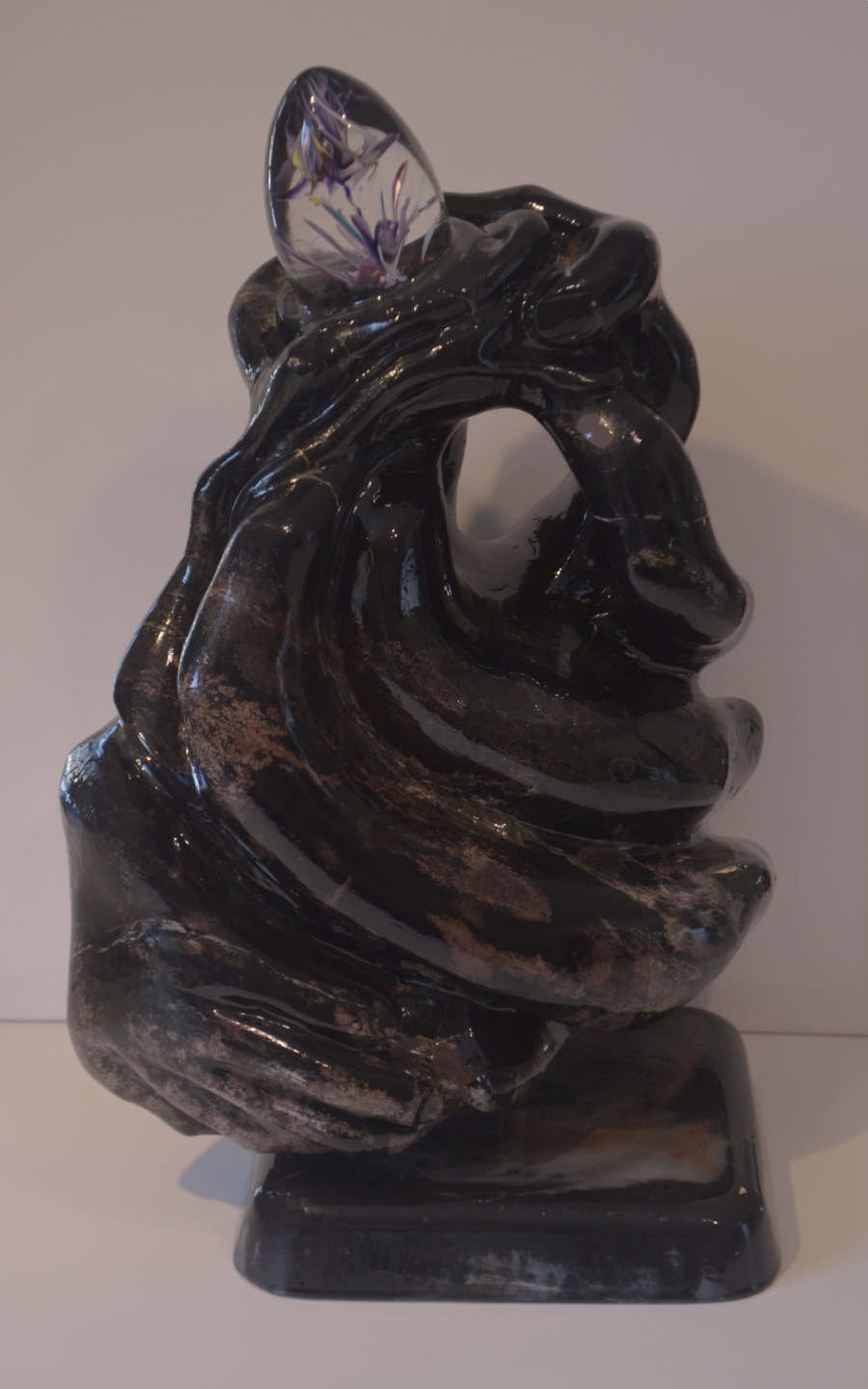
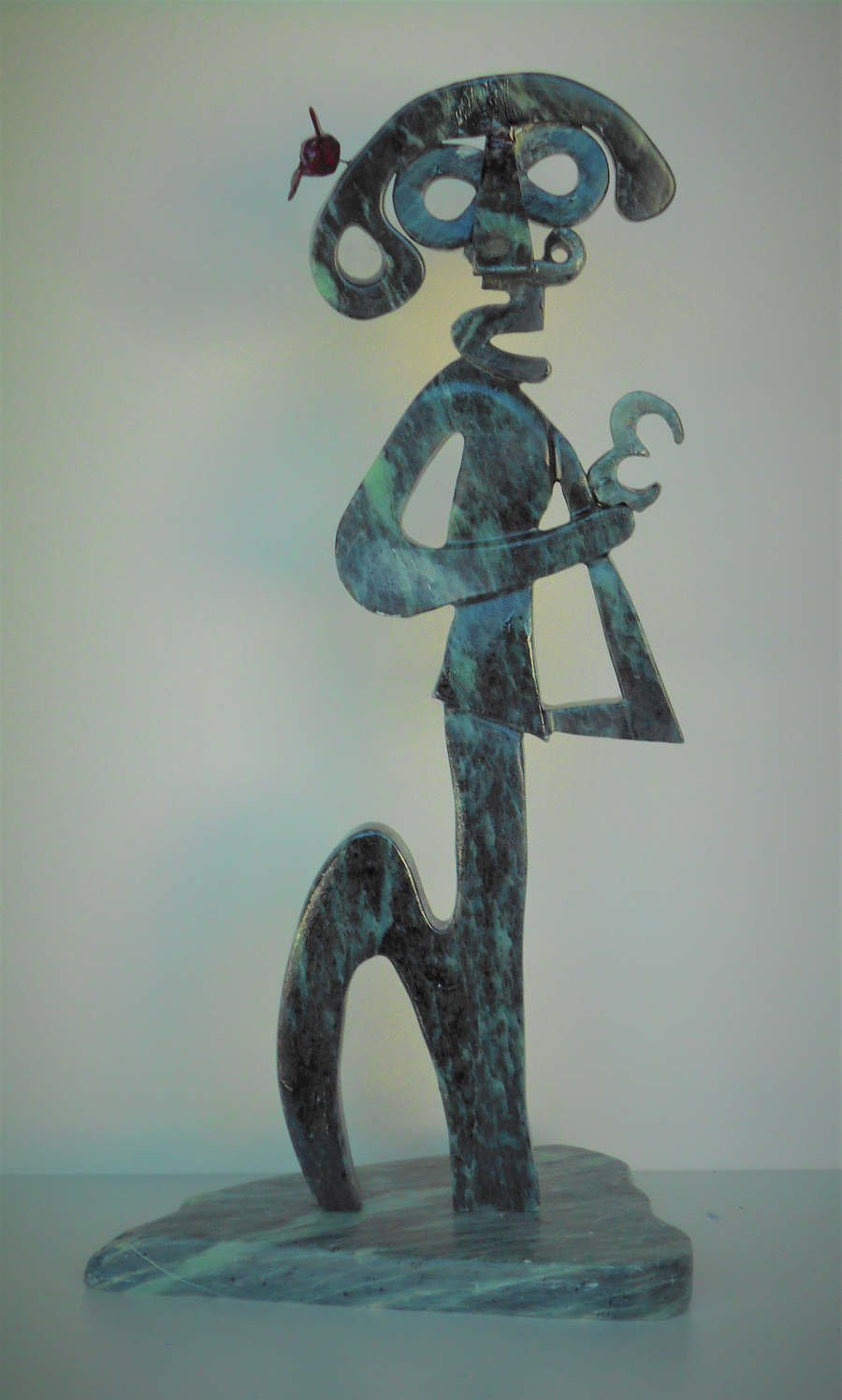
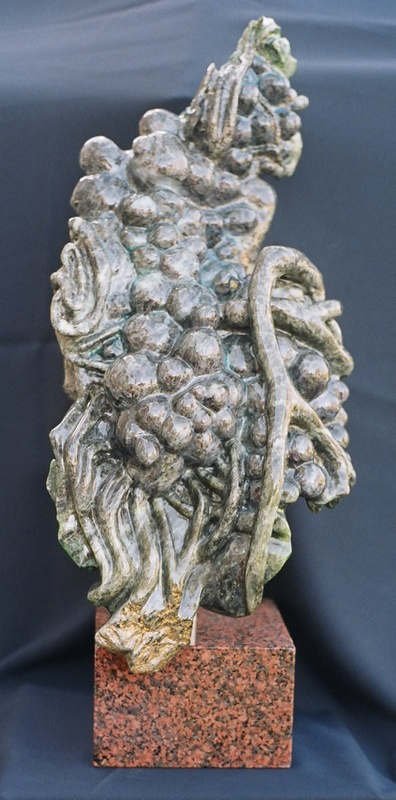
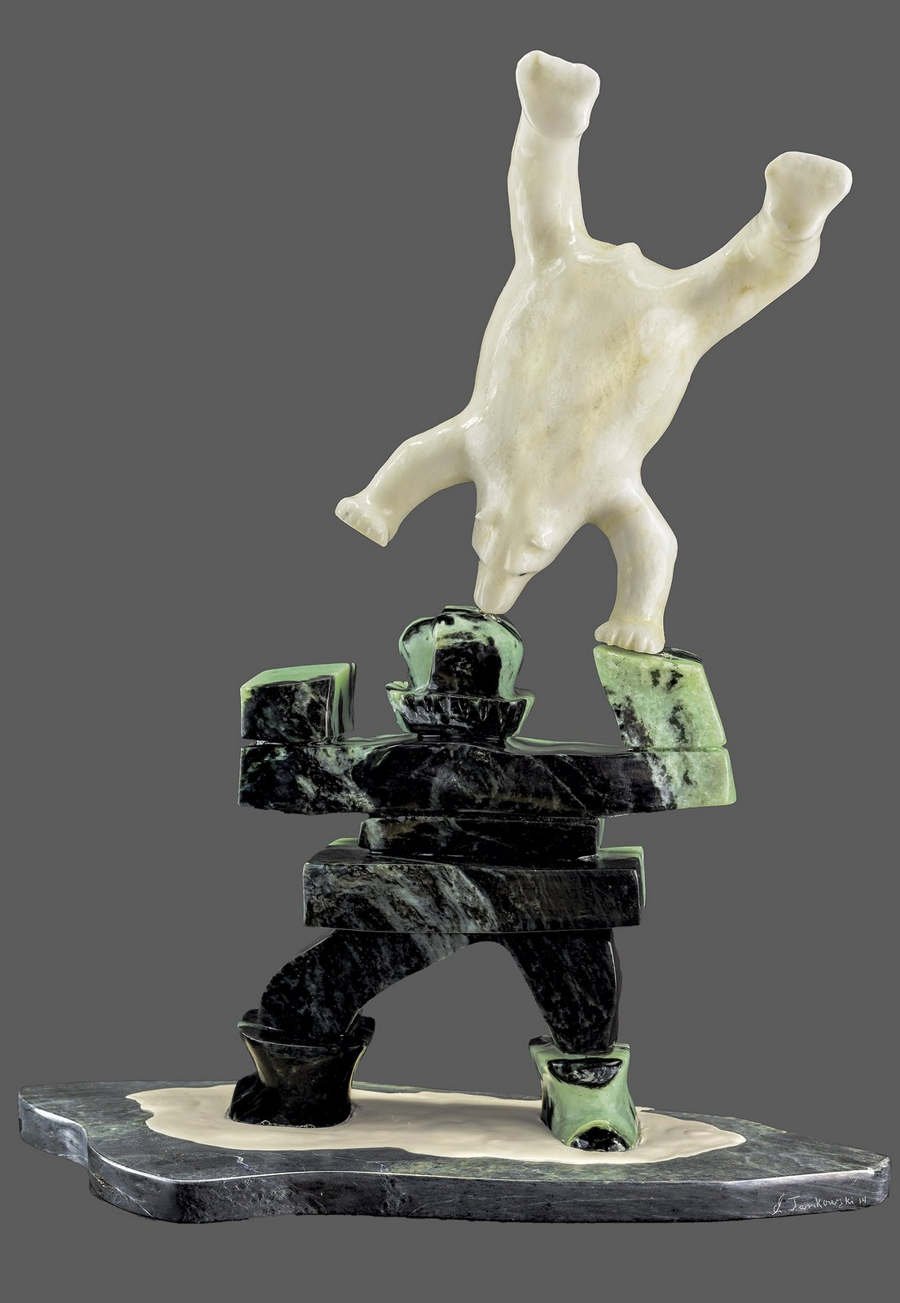
Les sculptures de l’artiste sont facilement reconnaissables à l’ajout de pièces secondaires au sujet principal. Ces pièces prennent parfois la forme de pierres semi-précieuses et de morceaux de bois, utilisés pour créer un effet plus réaliste. Se sentant limité par le principe des sujets sculptés, Eugène décide de travailler directement la pierre, et il tend de plus en plus vers sa propre technique personnelle, qu’il nomme le STYLE LIBRE. Aujourd’hui c’est la première technique qu’il enseigne à ses élèves en leur expliquant que lorsqu’ils sculptent, leur expression artistique doit être dictée par la forme de la pierre, la technique et l’outil, et que le plus important demeure leur imagination. À quelqu’un lui ayant fait remarquer qu’il n’avait pas de constance dans son œuvre, Eugène répondit que la créativité ne peut s’exprimer dans la constance, car la constance dans la créativité devient de la répétition.
POUR L’ARTISTE, SCULPTER, C’EST SON ÂME, ET ENSEIGNER, SA PASSION!
It is in light of four major influences—his Polish heritage, his childhood spent in the Abitibi wilderness, his professional training, and more recently, his relationships with the Inuit—that one can truly understand Eugène’s journey and body of work as a stone sculptor.
In the beginning, he sculpted figures inspired by mythology and esotericism, two themes he explored extensively. Seeking to refine his mastery, Eugène began repeatedly sculpting human bodies, heads, and animals. Through this process, he realized that he could teach what he himself had learned through trial and error.
The artist’s sculptures are easily recognizable by the addition of secondary elements to the main subject. These elements sometimes take the form of semi-precious stones and pieces of wood, used to create a more realistic effect. Feeling limited by the traditional concept of sculpted subjects, Eugène chose to work directly with the stone itself, increasingly developing his own personal approach, which he calls FREE STYLE. Today, this is the first technique he teaches his students, explaining that when sculpting, their artistic expression should be guided by the shape of the stone, the technique, and the tool—and that imagination remains the most important element. When someone once remarked that there was no consistency in his body of work, Eugène replied that creativity cannot thrive within constancy, because constancy in creativity becomes repetition.
FOR THE ARTIST, SCULPTING IS HIS SOUL, AND TEACHING IS HIS PASSION.